SpaceX Clears Key Hurdle to Double Falcon 9 Launches at Cape Canaveral, Paving Way for More Missions and Booster Landings
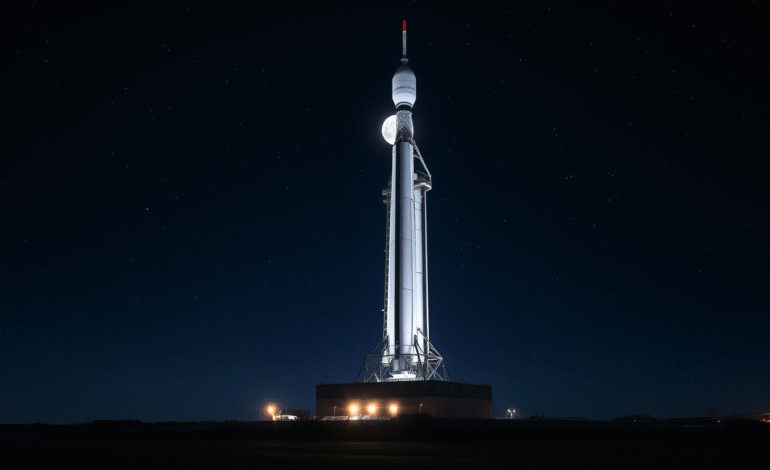
The Falcon 9 rocket, currently the most frequently launched globally, stands on the brink of further expansion following a significant environmental review by U.S. authorities.
The Federal Aviation Administration (FAA) has concluded a key evaluation that greenlights SpaceX to potentially boost its launches from Florida’s Cape Canaveral Space Force Station beyond the current limit of 50 per year, up to a maximum of 120.
In addition to this annual increase, the environmental assessment also endorsed the establishment of a new on-site landing zone capable of accommodating approximately 34 booster landings annually. These boosters represent the reusable first stages of Falcon 9 rockets, which SpaceX recovers and restores for subsequent flights.
The review, finalized on Wednesday, determined what’s referred to as a “Mitigated Finding of No Significant Impact,” signifying that the proposed modifications would not adversely impact the environmental quality under federal law, with potential negative effects minimized by specific protective measures.
These safeguards include obtaining additional environmental permits prior to construction of new facilities, employing sea turtle-friendly lighting at night, and executing pre-construction surveys of Florida scrub-jay and eastern indigo snake populations to maintain wildlife conservation.
In terms of water management, the review concluded that industrial wastewater — specifically, the large volumes of water discharged by the deluge system during launch — is highly unlikely to contaminate nearby waters.
The deluge system, which disperses vast quantities of water onto the launch pad during liftoff to mitigate heat and sound from rocket engines, has been a subject of debate. At SpaceX’s Starbase launch site in Texas, environmental organizations have challenged local regulators over authorizations granting the company permission to discharge industrial wastewater from the pad.
Wednesday’s environmental approval represents a single step in the process. SpaceX must still secure an official modification of its launch license from the FAA to enable the higher launch numbers, as well as approval from the Department of the Air Force, since the launch pad is situated on Space Force property.
The decision opens up possibilities for SpaceX to persist in its pattern of escalating Falcon 9 launches annually. Launch frequency has surged significantly over recent years, progressing from 60 launches per year in 2022 to 132 anticipated in 2024.
Despite being the most frequently launched rocket worldwide, SpaceX’s manifest remains congested. It carries out missions for commercial clients, the Department of Defense, and its own Starlink internet satellites. The increased launch capacity should alleviate this backlog. The dedicated landing zone could also expedite booster turnarounds, as the company will not have to rely on recovering the booster offshore on a drone ship as often.
The decision is part of SpaceX’s broader push across multiple locations to augment its launch frequency. The company is also pursuing plans to launch as many as 100 Falcon launches per year from Vandenberg Space Force Base in California. Simultaneously, regulators are examining a proposal that would allow for an increase in Starship launches — SpaceX’s much larger rocket intended for moon and Mars missions — from both Texas and Florida.