Revisiting Cold War Bunkers: The Evolution of High-Security Data Centers in a Digital Age
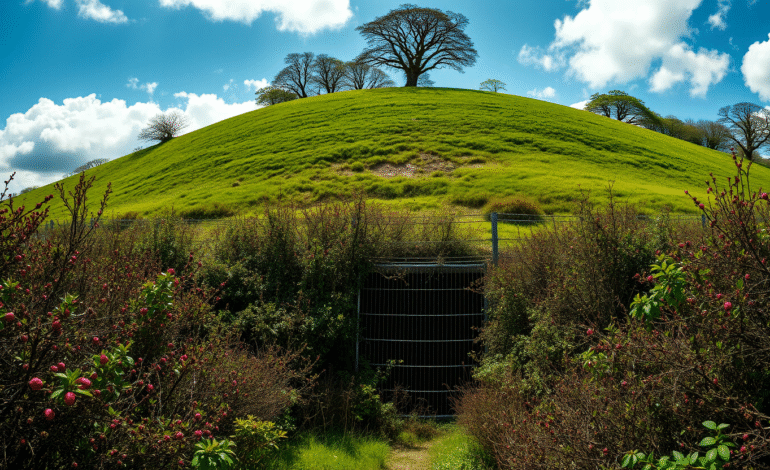
Nestled within the serene Kent countryside of southeastern England, a modern cloud computing facility lies hidden beneath the earth’s surface. The sun peeks through the dense foliage of hawthorn and brambles, concealing the imposing 10-foot high razor-wire fence that encircles the large grassy mound above.
Originally constructed in the early 1950s as a command-and-control center for the Royal Air Force’s radar network, this former nuclear bunker now serves as an ultra-secure data storage facility, operated by Cyberfort Group – a leading cybersecurity services provider based in London.
As I approach the solid grass-covered concrete structure at the heart of the compound, I am struck by the irony of its transformation from a Cold War command post to a high-tech digital fortress guarding our most prized asset: data.
My visit to the Cyberfort facility forms part of my ethnographic research into the practices surrounding “extreme” data storage, with a focus on the lingering fears of data loss and the often overlooked precautions taken – or neglected – in backing up our digital possessions.
Historically, human societies have buried their most valuable relics within underground sites for safekeeping, much like the tumuli and burial mounds of our ancestors where tools, gold, silver, and other treasures were interred. The Cyberfort facility carries on this ancient tradition, serving as a modern-day repository for the digital age’s equivalent of precious artifacts.
Around the globe, countless former bomb shelters have been repurposed over the past two decades to serve as “future-proof” data storage facilities. Repackaged relics include bomb shelters in China, derelict command-and-control centers in Kyiv, and abandoned Department of Defense bunkers scattered across the United States.