Gatik and Kodiak Robotics Lead Autonomous Trucking Advancements as They Expand Partnerships and Go Public
The autonomous vehicle sector is yet to mature fully, with progress being made but still years, if not decades, away from commercial maturity. This fact lends the industry an atmosphere of the Wild West, despite regular advancements being announced. Two such developments this week serve as a testament to both progress, potential, and risks – particularly in terms of public market volatility.
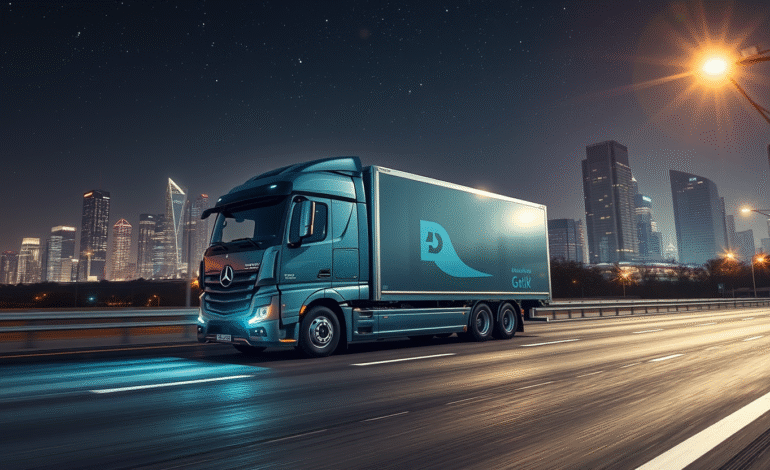
First is Gatik, a startup focused on autonomous vehicles and logistics. Originally profiled in 2019, the company has expanded its commercial partnership with Loblaw, Canada’s largest retailer. Under the agreement, Gatik will deploy 20 driverless trucks by the end of 2025 to deliver products across over 300 stores in the greater Toronto area from two distribution centers. Co-founder and CEO Gautam Narang shared plans to add another 30 autonomous trucks to the fleet by the end of 2026.
This partnership is significant, not only due to the fleet size but also because the trucks will handle Loblaw’s full regional network. The third-generation autonomous vehicles will be responsible for picking up products and making deliveries autonomously.
Next on the list is Kodiak Robotics, another self-driving truck startup I have previously covered. This week, the company began trading on Nasdaq under tickers KDK and KDKRW after merging with special-purpose acquisition company Ares Acquisition Corporation II, an affiliate of Ares Management. The deal valued the startup at approximately $2.5 billion.
Kodiak raised $275 million in financing, with more than $212.5 million coming from institutional investors, including $145 million in PIPE funding and around $62.9 million in trust cash from Ares. Notably, the trust cash was smaller (previously $562 million), as some SPAC investors chose to redeem their shares.
Founder and CEO Don Burnette discussed the reasons behind taking the company public – particularly via a SPAC – just before Kodiak’s market debut. Burnette highlighted the substantial capital requirements for building and scaling an autonomous driving company, stating that going public was the ideal path forward for the company. He felt that given various options, choosing a SPAC route was the best decision from a timing perspective.
Burnette also expressed optimism about defense applications, citing unstructured autonomy as a key area where Kodiak excels.
In other developments, there have been changes at Supernal, Hyundai’s electric air taxi startup. A broader reorganization of Supernal’s C-suite is underway, with Chief Strategy Officer Jaeyong Song and Chief Safety Officer Tracy Lamb part of the transition to new leadership, as confirmed by Hyundai Motor Group.
Other notable news includes the comeback of Moxion Power founders with a new startup called Anode Technology Company, which has designed a mobile battery and inverter for EV charging and supplying power to construction sites and live events. The startup recently raised $9 million in seed funding led by Eclipse Ventures.
Eclipse Ventures has been active this year, with the venture capital firm leading investments in multiple transportation-focused companies, including Also, a micromobility startup spun out of Rivian, and Wayve, an autonomous driving company.
Other developments that caught my attention include:
* Rapido, a popular ride-hailing platform in India, doubling its valuation to $2.3 billion following a secondary share sale by food delivery giant Swiggy.
* Telo, the electric truck developer, raising $20 million in Series A funding co-led by designer Yves Béhar and Tesla co-founder Marc Tarpenning. Additional investment came from Salesforce CEO Marc Benioff and early-stage funds like TO VC, E12 Ventures, and Neo.
* The U.S. administration seeking up to a 10% stake in Lithium Americas in exchange for renegotiating the repayment period of a $2.26 billion Department of Energy loan.
* Hackers causing issues in the transportation sector, with Stellantis confirming a data breach involving customers’ personal information, and delays at Brussels, Berlin, Dublin airports, as well as London’s Heathrow, due to a hack targeting check-in systems provided by Collins Aerospace.
* Battery materials startup Sila starting operations at its facility in Moses Lake, Washington, with the potential for longer-range, faster-charging EVs.
* Automakers continuing to scale back on electric vehicles and electrified vehicles, with Honda ending U.S. production of its Acura ZDX electric vehicle and Stellantis canceling plans to produce a 4xe plug-in hybrid Jeep Gladiator in North America by the end of 2025.
* The National Highway Traffic Safety Administration opening an investigation into Rivian over issues with the seat belts in its electric delivery vans that could increase crash risks.
* Tesla asking the Environmental Protection Agency not to roll back current vehicle emissions standards, contrasting other major automakers pushing for relaxed regulations.
* TuneIn collaborating with the Federal Emergency Management Agency to deliver emergency alerts directly to drivers.
* Volvo Cars committing to U.S. production, announcing plans to expand its factory in South Carolina to produce a hybrid vehicle by the end of the decade.
* Waymo launching “Waymo for Business,” a service designed for companies to set up accounts enabling their employees to access robotaxis in cities like Los Angeles, Phoenix, and San Francisco.
* Zoox seeking federal regulatory approval for commercial deployment of its custom-built robotaxis, which lack traditional controls like pedals and a steering wheel.
* Finally, Luminar founder Austin Russell reappearing as the co-founder of Russell AI Labs, a platform supporting transformative AI and frontier technology companies. Russell’s co-founders include Markus Schäfer, CTO and board member at Mercedes-Benz Group AG, and Murtaza Ahmed, formerly a managing director at Goldman Sachs and a partner in the $100 billion Vision Fund and managing partner of its $5 billion Latin America Fund.