Mythos AI’s Radar-First Navigation System, APAS, Trials on CB Pacific Vessel for Next-Gen Bridge Intelligence
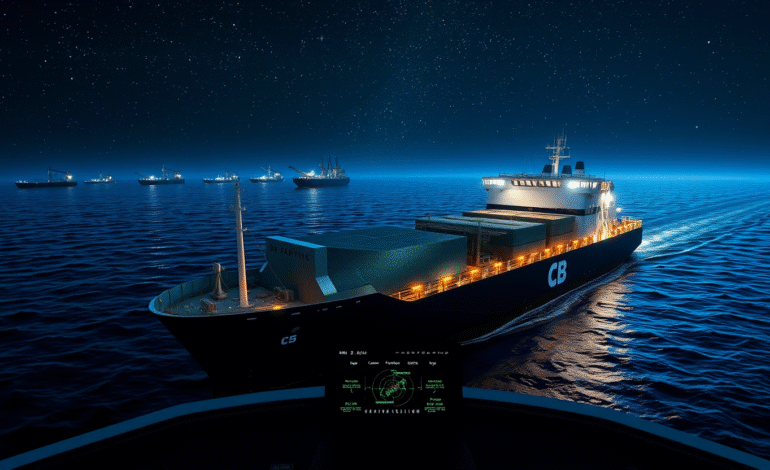
Maritime tech firm Mythos AI has successfully integrated its Advanced Pilot Assistance System (APAS) onto the CB Pacific, a chemical cargo vessel operated by CB Tankers.
Designed to streamline navigation at sea, APAS employs a radar-centric approach in conjunction with other sensory technologies, directly connecting to a ship’s radar system for data processing and potential human alerts during voyages. By enhancing mariner situational awareness while retaining human judgment as the primary decision-making entity, APAS aims to reduce cognitive load and improve safety.
Mythos AI CEO, Geoff Douglass, noted that their mission is not automation of crew roles but rather equipping them with cutting-edge tools: “APAS unifies our proprietary radar perception, machine vision, and intelligent alerting with the vessel’s dynamics, transforming complex scenarios into clear, actionable decisions – thus enhancing safety and operational resilience.”
The CB Pacific was selected for testing due to its dependable routes and top-tier Furuno radar. This trial follows the initial APAS installation on a Southern Devall towboat on the Mississippi River in August 2025, marking the commencement of a year-long experiment intended to bring next-generation bridge intelligence to commercial shipping.
Douglass commented that collaborations with lomarlabs and CB Tankers will enable APAS to assimilate master mariner expertise and global port navigation norms: “Through this project, we’re validating large-scale performance and establishing the foundations for fleet-wide adoption.”
The year-long trial of APAS aims to ensure safe and effective functionality in real-world conditions, adhering to international COLREG (Convention on the International Regulations for Preventing Collisions at Sea) regulations.
CB Tankers is affiliated with the Lomar group of companies. Stylianos Papageorgiou, managing director of lomarlabs, emphasized that meaningful advancements in maritime AI arise from operational testing: “True innovation doesn’t materialize in presentations; it emerges during real-time operations, port calls, dry docks, and sea trials.”
With growing interest from the defense sector, APAS represents a crucial step towards the adoption of AI-driven navigation systems in both commercial and strategic maritime activities.